RELIEF coin examination instrument Dealer pilot
Prototype · desktop coin examination instrument

Every coin has a story. Show the evidence.

A desktop instrument for coin dealers and auction houses.

RELIEF is a desktop instrument for coin dealers and auction houses. Put a coin in, turn it over, and you get its photographs, its surface to relight and turn, and a draft report to check before a buyer sees it.

Because “looks pretty good to me” isn’t a measurement.

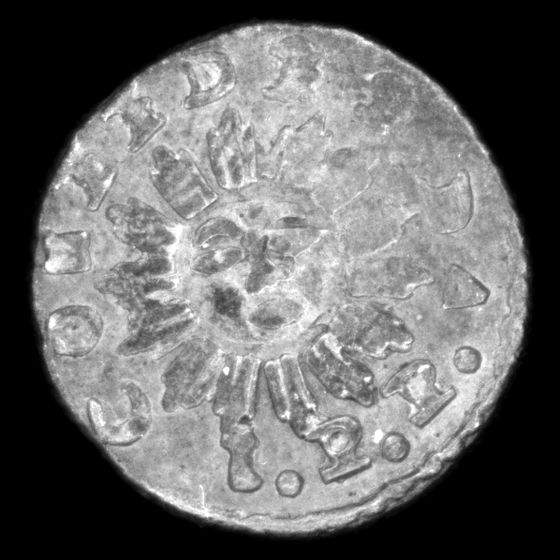
The sun side of a Córdoba 1 real of 1843, photographed by the instrument under one low light from the side, the whole coin on the dark drawer floor
Photograph · one frame of the scan
Córdoba, 1 real, 1843 · sun side · current instrument Move across the coin to move the light. Arrow keys work too.

The instrument’s own photographs. Move the light, then switch to the measured surface. Turn it over in 3D

The Córdoba real's sun side under even light, the whole coin
PhotographsEven light, and one frame for every light.Photograph
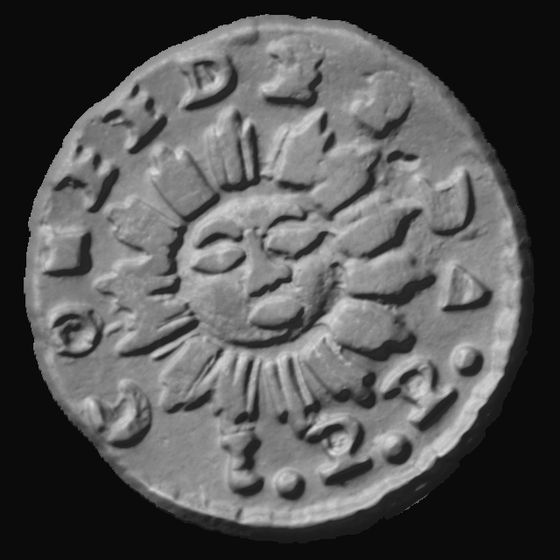
The same face rendered from its measured surface, lit from the upper left
A surfaceRelight it and turn it over; both faces.Measured
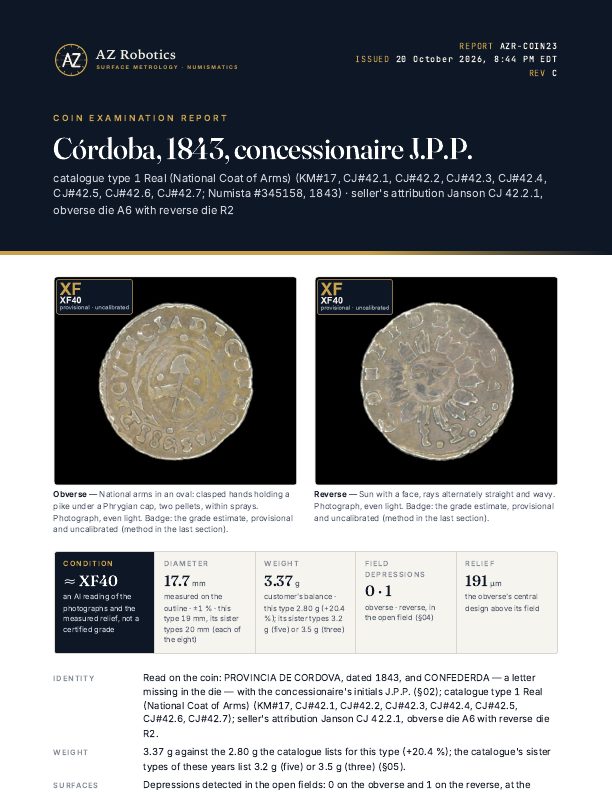
The cover page of the Córdoba real's examination report, revision C, an example report
A recordThe examination, with each printed number re-derived from the examination record by the report’s own check.Measured Read
From coin to documented specimen

Place it, light it, measure it, read it.

Our design goal: a coin from scan to draft report in minutes.

  1. Coin in

    Set the coin in a carrier sized to it (printed so far for eight sizes, 17.9 to 40.6 mm), or leave it in its PCGS or NGC holder, slide the drawer in and press Scan; a raw coin’s weight is typed in.

  2. The first face: lights, upload, solve

    The coin is lit from one direction after another and photographed under each light. The scanner checks the frames and uploads them, and the surface is solved on a cloud GPU service.

  3. Flip it: the second face

    Turn the coin over and the other face is scanned and solved the same way.

  4. The report

    Photographs, the surface of both faces, and a draft examination report to check before a buyer sees it, built from the two solved faces and the examiner’s readings (legends, identification, grade). Read Identification and grade are readings, labelled as readings wherever they appear.

CAD rendering of the instrument in its printed colours: a dark red case, a grey head with a black cap, the black drawer out with a coin on its carrier
CAD · an illustration, not a recording
drawer out

Loading the CAD model…

The instrument, as CAD · an illustration of a scan

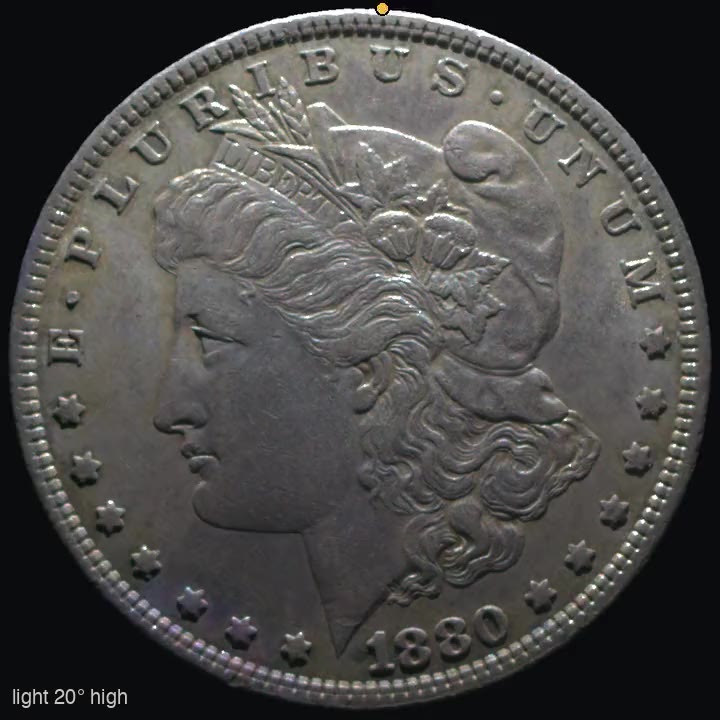
An 1880 Morgan dollar's obverse, lit from one of the instrument's lights
Toning, under every light

Tilt the coin without touching it.

An 1880 Morgan dollar’s toning, lit from 60 directions in turn. Made only from the 60 photographs, one per light, crossfaded from one to the next; nothing is rendered.

Experimental Colour is not yet calibrated against a colour target; each light’s own tint is removed with a white card. Two fixed light heights cannot show every colour a hand tilt can.

Explore real coins

Four coins, as our scanners saw them.

Each is a real scan of both faces: the Córdoba on the instrument shown on this page, the other three on the earlier rig. Move the light, compare the picture with the measured surface, and take the short tour of what the examination found.

The Córdoba real's sun side: the albedo, an even-light image computed from the scan's photographs The Córdoba real's sun side rendered from its measured surface
AlbedoSurface
Albedo · computed from the scanLamp follows you

Loading the measured surface…

Face
View
Height

The edge of the coin is drawn, not scanned.

Specimen
Córdoba (Argentine Confederation), 1 real, 1843
Scanned
October 2026, both faces, on the current instrument
Report
AZR-COIN23, revision C · PDF · 2.0 MB Example report

Córdoba, 1 real, 1843

A gap in its legend.

  1. The missing letter

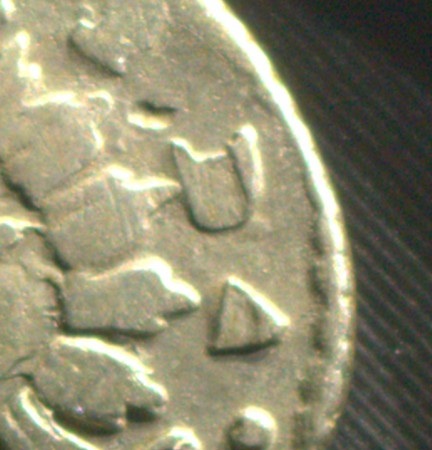
    Read Between R and D, in the report’s words, a blank of smooth struck field one letter wide, with no trace of a letter, where the other letters stand evenly spaced. Read as CONFEDER DA. Provisional: the A reads as absent in the die, not lost from this coin.

    Provisional: the die reading rests on a second coin, judged by eye to be from the same dies, in a dealer’s photograph not yet on file; a die study with both coins would settle it.

  2. Off the type’s listed weight

    Stated 3.37 g on the owner’s balance, Catalogue against 2.80 g listed for this type (+20.4 %); the catalogue’s sister types of these years list 3.2 to 3.5 g.

  3. The other side

    Measured Die axis 354°, 6° from medal alignment, on uprights set by eye; the figure moves degree for degree with the uprights, whose uncertainty is not measured. The report calls it within its working tolerance, a default of ±15 to 20° in the code, not a validated range.

One coin, start to finish

A provincial real with a gap in its legend.

One coin, the same face, from the photograph to the examination’s reading, all from one scan and its report (revision C, PDF, 2.0 MB).

  1. The photograph

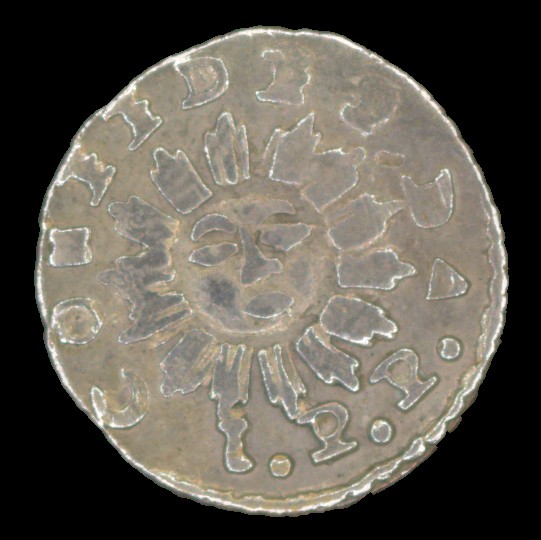
    Photograph The instrument’s photograph under even light, as the report prints it. The sun with a face, rays straight and wavy, the legend around. Around the sun, clockwise from the lower left, the catalogue reads CONFEDERADA. Look at the upper right.

    The Córdoba real's sun side photographed under even light, the whole coin
    Photograph, from the report.
  2. The measured surface

    Measured The same face as a measured surface. Turn it under the light and the letters stand up out of the field.

  3. The detail

    Read The report’s words: between the R and the D, “a blank of smooth struck field one letter wide, with no trace of a letter, where the other letters stand evenly spaced; a small smooth pit at the blank’s inner edge.”

    Close-up photograph of the upper right of the coin: the R at the top, then a blank, then the D and the A
    Photograph, from the report: the R, the blank, then D and A.

    Experimental From a separate legend study, not in the report: the blank is about 2 mm wide, against about 1.9 mm for a letter, and R and D stand about 3.95 mm apart centre to centre, against about 2.9 mm for neighbouring letters.

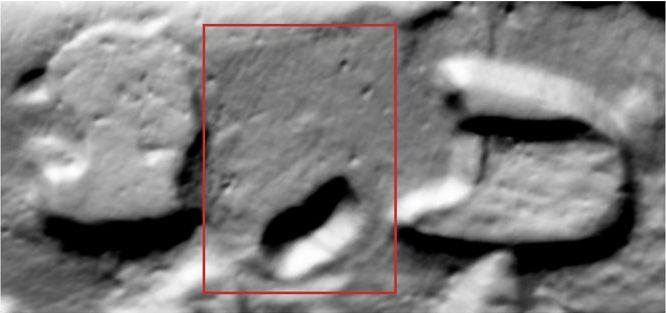
    Shaded relief of the legend at the blank, from the measured surface: a boxed stretch of smooth field with a small pit inside it, letters either side
    Rendered from the measured surface: the blank boxed, the letters either side, the small pit the report notes inside it.
  4. What the reference says

    Catalogue Numista #345158, KM#17: 1 real, Córdoba, 1843, national arms. Reverse legend CONFEDERADA J.P.P. The catalogue lists 19 mm and 2.80 g for this type.

  5. What is on this specimen

    Read Read on the coin: CONFEDER DA J.P.P., the A absent and the blank struck field, a small smooth pit at the blank’s inner edge. The obverse reads PROVINCIA DE CORDOVA, the final A present where the catalogue’s photograph of this type ends CORDOV (a typed reading; the letter reader confirmed 3 of its 18 letters). The catalogue’s issue list pairs the CONFEDERDA spelling only with its CORDO and CORDOV dies; this die pair rests on the seller’s attribution (Janson CJ 42.2.1).

    Diameter
    Measured about 17.7 mm on the photographed outline (not calipered), against 19 mm listed
    Weight
    Stated 3.37 g on the owner’s balance, against 2.80 g listed for this type (+20 %); the catalogue’s sister types of these years list 3.2 to 3.5 g
    Die axis
    Measured 354° on uprights set by eye, 6° from medal alignment; the report’s working tolerance (±15 to 20° in the code) is a default, not a validated range
  6. What the examination reads

    Read Provisional: the gap reads as a feature of the die, not damage to this coin. The reading rests on one comparison: a second coin, judged by eye (the owner and the examiner) to be from the same dies, in a dealer’s photograph relayed by the owner, shows the same blank. The same comparison is why the report does not count the flat broad rays and the R at the upper right as wear. The weight sits outside this type’s catalogue figure (inside its sister types’ 3.2 to 3.5 g) and the diameter, about 17.7 mm, is under the 19 mm listed; the cause is not decided; the report names the next measurement, a specific-gravity (density) test.

    Readings are AI-assisted readings of the photographs and the surface, labelled as such in the report; none of it is a certification.

What you actually get

A record for the listing, and the examination behind it.

The examination is the source. Shorter documents are built only from fields that passed its automatic checks.

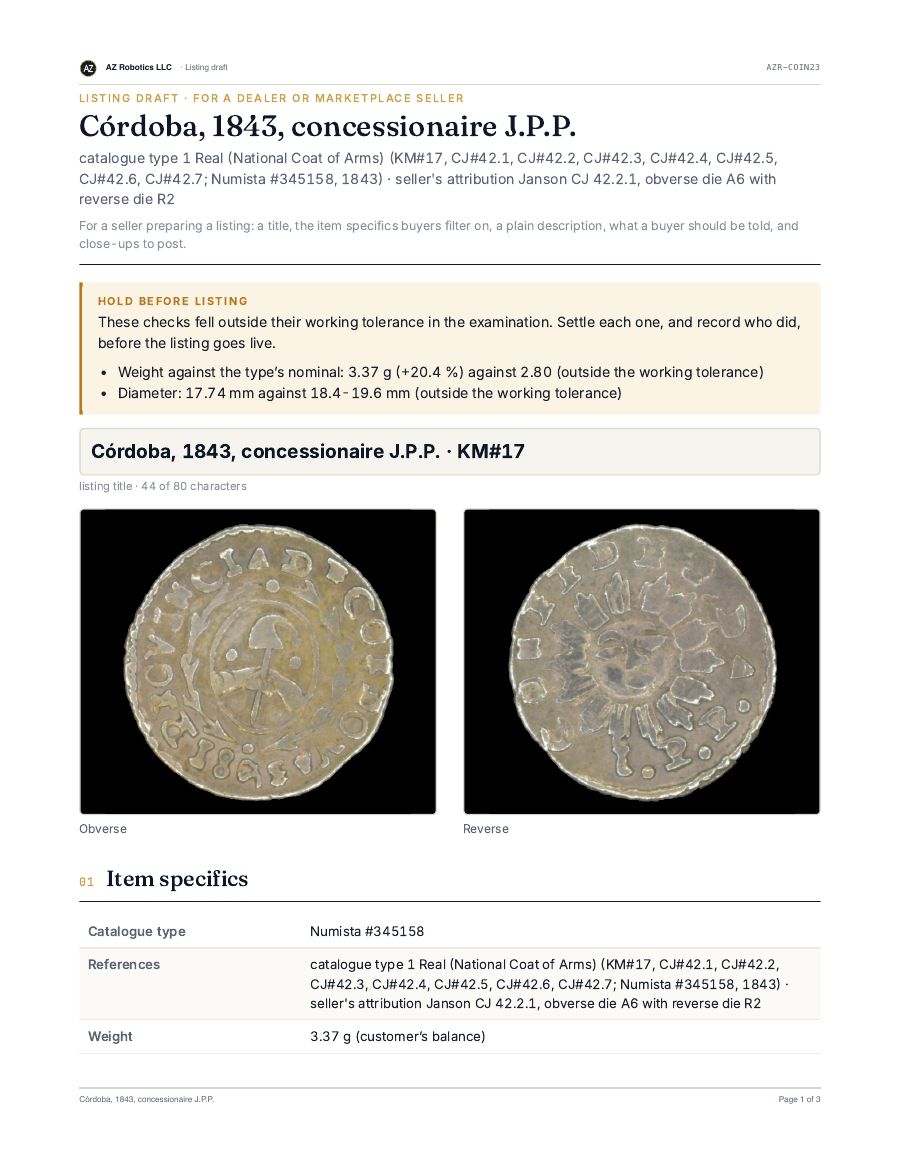
Page 1 of the listing draft built from the Córdoba real's examination: title, item specifics, description and photographs

For the listing Prototype

  • A listing draft: a title that fits in 80 characters, the item specifics buyers filter on, a plain description, and close-ups to post.
  • What a buyer should be told. Anything a check flagged moves here instead of into the description, and the draft holds the listing until each item is settled. On the Córdoba: the weight, 3.37 g against 2.80 g, and the diameter, 17.7 mm against the 19 mm listed (outside our ±3 % working tolerance).
  • A lot description for an auction catalogue, from the same record.
  • The asset pack that goes with each report: photographs of both faces, a short animation of each, and the PDF.
Listing draftPDF · 560 KB · the Córdoba Auction lotPDF · 396 KB · the Córdoba

Built for four coins. No dealer or cataloguer has used one yet; finding out whether you would is what the pilot is for.
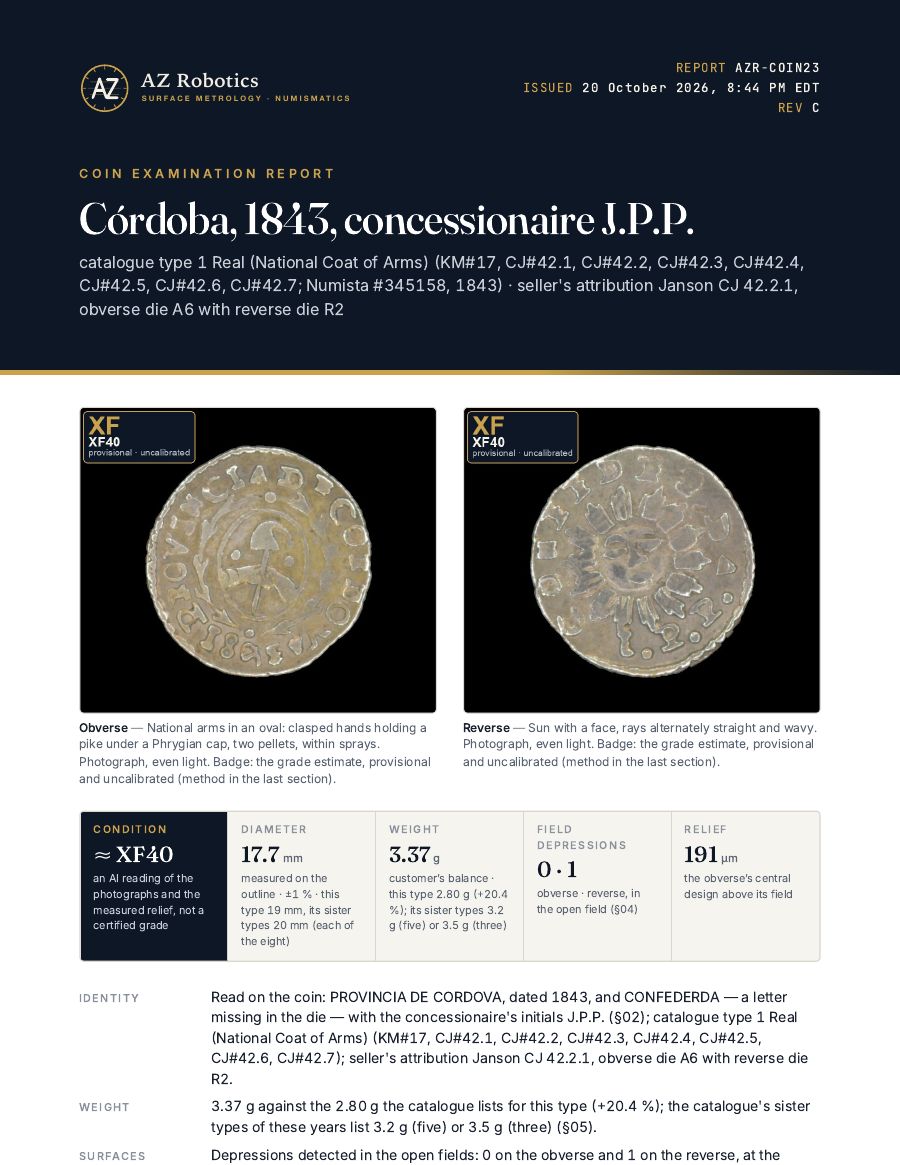
Page 1 of the examination report AZR-COIN23 revision C, an example of the report format: both faces, the identification, the facts and the grade reading with its band

The examination Example report

  • Identification with its catalogue references, the legends as read, condition items located and sized, measurements with the calibration named, a provisional grade with its band, and what is undecided with the next measurement that would decide it.
  • When it was made, its 12 automatic checks re-derived the 193 printed numbers from the examination record and passed.

An example of the report format, from our lab. It carries no reviewer sign-off; the “Issued” date on its cover is the date the report engine wrote it.

More example reports (six)

Examples of the report format, from our lab, with no reviewer sign-off; the “Issued” date on each cover is the date the report engine wrote it.

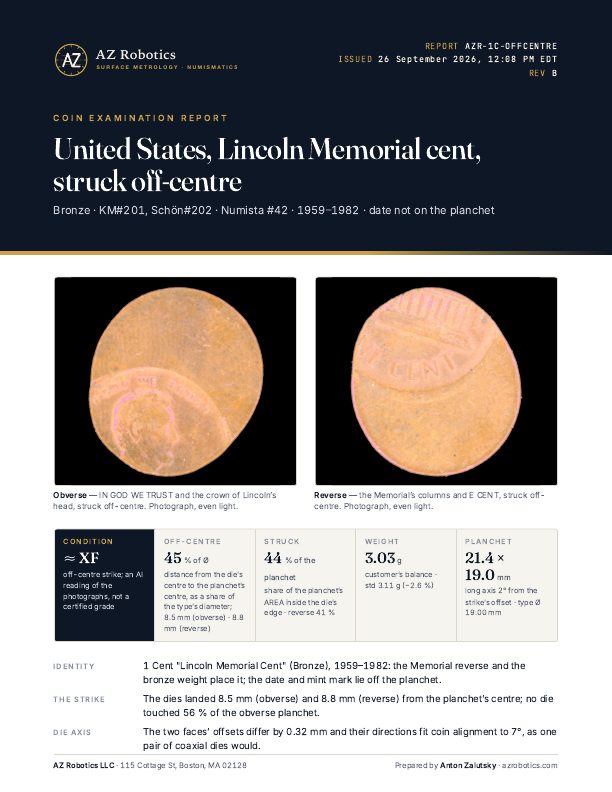
Report cover: Lincoln cent struck off-centre
Lincoln cent, struck off-centrerevB · PDF · 2.4 MBOff-centre strike, measured.
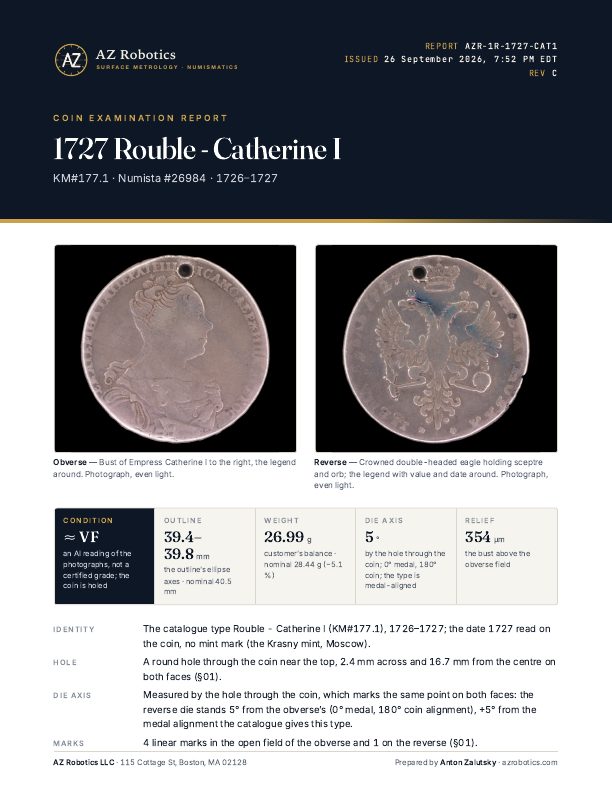
Report cover: 1727 rouble of Catherine I
Rouble, 1727revC · PDF · 5.1 MBA holed coin; the hole is used to measure the die axis.
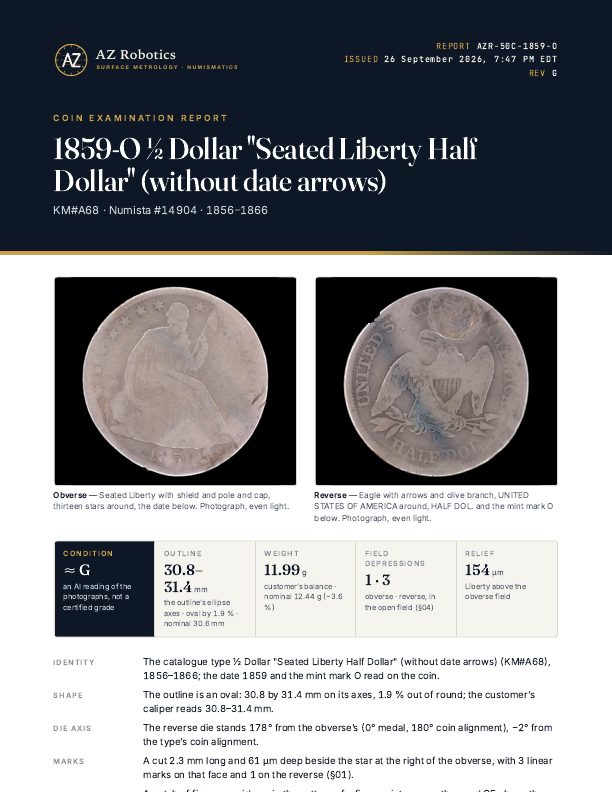
Report cover: 1859-O Seated Liberty half dollar
Seated half dollar, 1859-OrevG · PDF · 4.7 MBIts marks located.
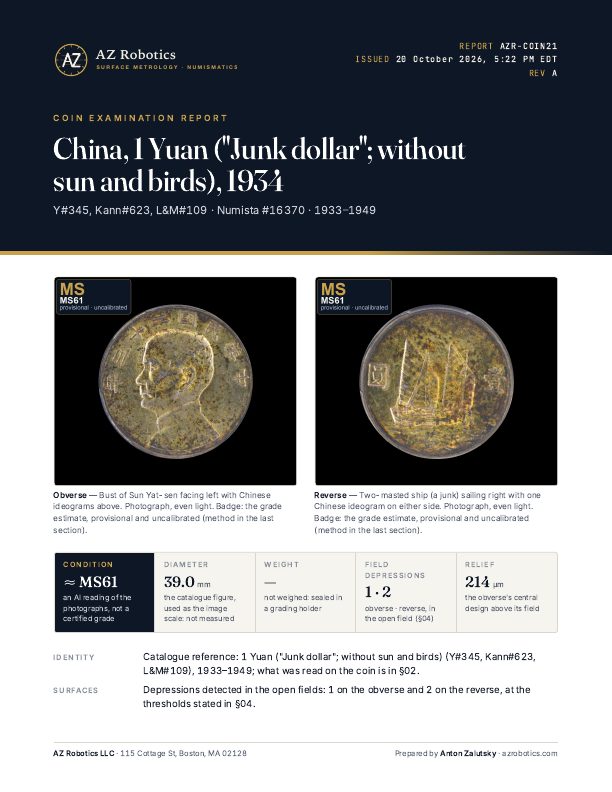
Report cover: 1934 Chinese junk dollar in its PCGS holder
Junk dollar, 1934, in its PCGS holderrevA · PDF · 6.5 MBScanned through its holder.
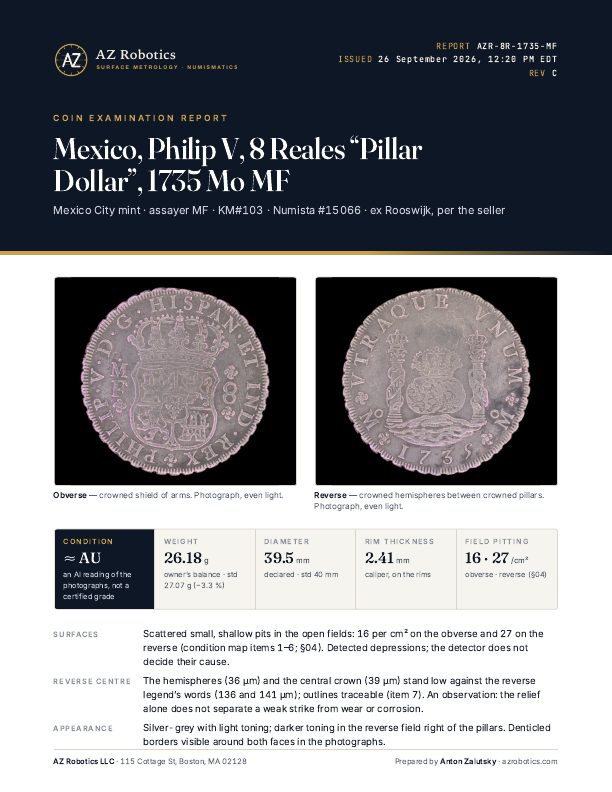
Report cover: Mexico 1735 pillar dollar
Pillar dollar, 1735revC · PDF · 6.3 MBFrom the first weeks of scanning.
Cover of the editorial layout for the Lima 1772 eight reales
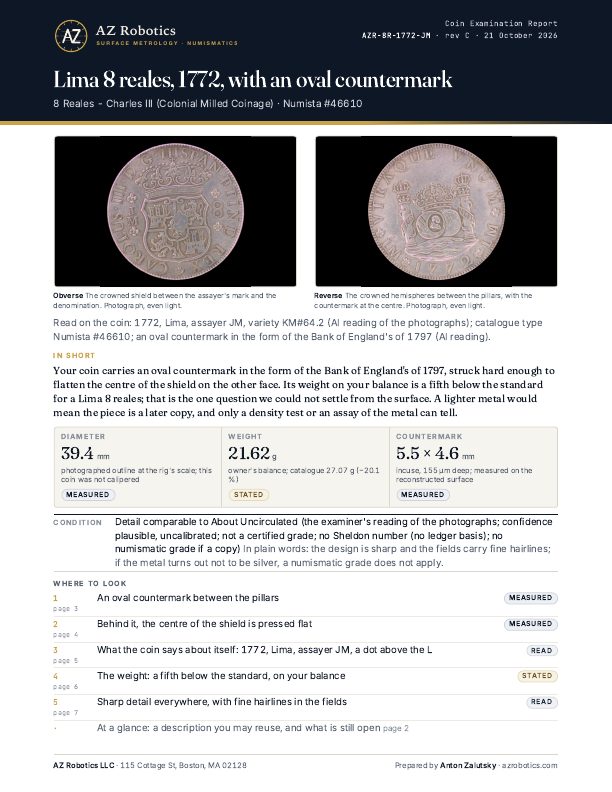
Lima 8 reales, 1772editorial layout · PDF · 3.8 MBPrototype Underweight by a fifth on the owner’s balance; whether it is silver is not tested.
Where it fits

Who it is for, and what it will not do for them.

WhoWhat it addsWhat it does not do
DealersPhotographs taken under the same fixed lights and camera each time (how closely they match from one seating to the next is not measured), a surface that shows what a photograph flattens (a gap in a legend, a strike that missed half the blank, where a coin wore), identification support with the catalogue reference and the reading labelled, condition items located and sized.Authenticate a coin, certify a grade, or stand in for a grading service. Whether it saves you time is what the pilot is for.
Auction housesA lot description drafted from the examination (prototype), consistent photographs, and surfaces bidders could relight and turn, as on this page.Connect to catalogue software, or host the surfaces on your lot pages. Neither is built.
CollectorsA dated record of a coin’s surfaces, both faces, with its photographs and measurements, as files you keep.Tell you what it is worth.
Researchers and institutionsThe record behind every printed number, and surfaces you can compare between coins.Promise traceable measurements. That is not yet validated.
The instrument

A box on your desk, and a drawer.

The coin rides a drawer, in a carrier sized to it or in its holder. Slide the drawer in and press Scan.

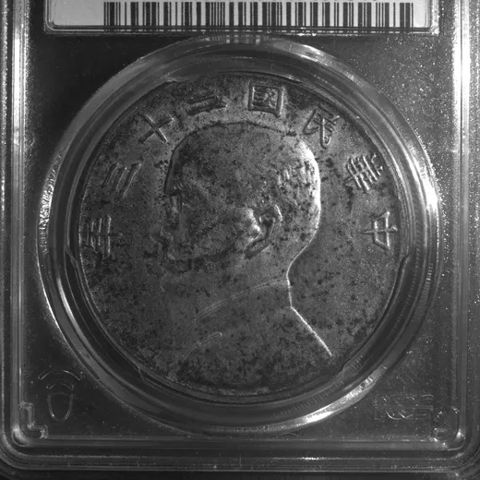
A 1934 Chinese junk dollar in its PCGS holder, in the drawer
Through the holder

A slabbed coin stays in its holder.

A 1934 dollar scanned through its PCGS holder, without removing it.

Through the plastic the coin cannot be weighed, and a mark cannot always be told from a scratch on the holder. In or out of a holder, a proof’s mirror fields do not solve.

Dealer pilot

Bring a coin you have a question about.

We are looking for a small number of dealers and auction houses to try the instrument on coins they choose and tell us, bluntly, which outputs they would use and which they would not. In person in Boston, or on a video call while we scan.

What we are not doing yet: selling hardware. There is no price list, no preorder and no ship date.

No account and no newsletter. We use what you send to reply to you.

Apply for the pilot

Leave blank if you collect for yourself.
What best describes you? required
0 of 2,000

Sent to AZ Robotics LLC; a person replies. If the form will not send, write to azalutsky@gmail.com. Your draft is kept in this browser until it is sent.

Apply for the pilot by email

The form needs JavaScript, which is off here. Write to this address with your name, your company, what you do, and what you would want the instrument to do for you:

azalutsky@gmail.com